

Se7en Questions with Filmmaker
Gregory Hatanaka
Who are some of the artists or some of the works that inspired you to get started in your field? Of today’s current artists, who do you draw inspiration from?
When I was starting out, I gravitated toward directors who worked with an uncompromising honesty. John Cassavetes was central for me, he proved that a filmmaker could balance commercial survival with deeply personal, difficult projects. Kurosawa and Bergman shaped my sense of discipline and psychological depth. Tarkovsky influenced me with his spiritual and poetic cinema, which lingers in the subconscious long after the screen fades. Internationally, Michael Haneke has always stood out, his refusal to look away from the ugliness of life is unsettling, but it forces us to confront reality.
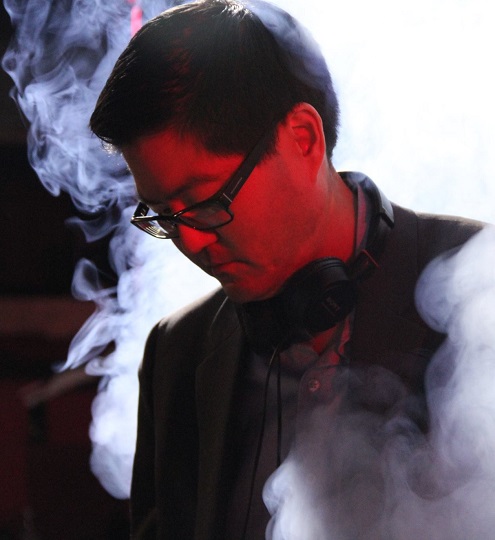
I am also not a purist. I admire filmmakers like Sean Baker, who shoot on iPhones and still tell stories with great power. And on the other end, I equally love mainstream comedy. Ernie Kovacs, the TV genius, is one of my heroes, and Office Space sits comfortably in my Top 5 movies of all time. I even pass the time rewatching classic SNL skits from the earlier great generations. They remind me of how comedy can illuminate the absurdity of life as well as any drama.
What have thus far been some of the negatives of being an indie artist in your field?
The negatives are undeniable. Financing is always the obvious challenge, but even when you finish the film, the bigger battle today is visibility. We live in a market where a $50 film shot on a phone competes for attention right next to a $100 million studio release. That’s democratizing, but it also means there are literally thousands of films released every week. The average viewer is overwhelmed—and often multitasking. They’re watching a film while scrolling social media, writing, checking the news. It forces filmmakers to adapt to how fragmented the audience’s attention has become.
There’s also a cultural loss. Cinema isn’t appreciated the way it once was. The experience of going to a theater, sitting with a crowd, sharing that collective energy—it’s disappearing. People are becoming more socially distant with each passing year. Did you ever think for once that people would break up their relationships or divorce their spouses via text messages? Did you ever think that Mom would rather text you than call you? It’s disturbing, but that’s the reality we’re living in, and it inevitably bleeds into the way films are experienced.
And finally, the financial side is brutal. In the VHS era, a rental could go for $100, or a DVD for $30. Today, to make $30 from streaming ad revenue, you might need 5,000 clicks. The math just doesn’t add up.
What have thus far been the positives of being an indie artist in your field?
The positives are just as real, and they’re what keeps me going. We live in a time where the tools to make a film are more accessible than ever. Smaller cameras, LED lights, even iPhones allow you to make something cinematic on a fraction of what it once cost. The FIY—film-it-yourself—movement is alive, and I consider myself part of it. That freedom to go out and create without waiting for permission is powerful.
Younger audiences are also rediscovering the past—films from the 70s and 80s, filmmakers like Cassavetes and Tarkovsky who once felt outside the mainstream. Even my own earlier work, like Mad Cowgirl, which was largely ignored when it was released, has found a second life among new audiences. That cycle of rediscovery is inspiring.
But the deepest positive is my family of actors and crew. They make all of this possible. Over the years we’ve grown so close that it really feels like a family—a happy one, but like any family, there are good winds and bad winds that blow through. What matters is that we stick together, we’ve got each other’s backs, and we keep pushing forward. I am forever indebted to my film family for their loyalty, passion, and trust.
And on a personal note, I love that this work allows me to keep learning—about different walks of life, other cultures, food, travel. That sense of exploration keeps me alive artistically, even when the industry itself can feel indifferent.
What have been your favorite completed projects to work on up to this point? Can you tell us a little bit about them?
Each film is its own battle and carries its own scars, but a few stand out. Mad Cowgirl remains deeply important to me because, although misunderstood at the time, it became one of those films people returned to and embraced years later. That delayed recognition is something many indie filmmakers experience. Later on, I’m especially fond of Choke, a character study of an intense relationship, and Blue Dream with James Duval. Both films allowed me to dive into personal, psychological storytelling, and they challenged me in new ways.
I’m also fascinated by the physicality in my films. In case you haven’t noticed, characters scream their lungs out in my films and often go into continuously maniacal convulsions. That kind of raw, physical expression fascinates me. Cinema can be cerebral, but it’s also visceral, and I love when the body itself becomes part of the storytelling.
That said, overall, I love all my films. They are my babies. I can’t live with the thought of missing one of them. Each one is part of me, and no matter how difficult they were to make, I wouldn’t trade them for anything.
What projects are you currently working on or have planned for the near future?
Right now, I’m finishing No Regrets, which is one of my most personal projects. It blends surrealism, music, and memory, and it’s as close to a culmination of my ideas as anything I’ve done so far. Beyond that, I keep several projects alive at once, because in the indie world you never know which one will move forward first.
I’m also still drawn to genre—the thrillers and action pieces inspired by the Cannon Films era. I grew up with those 80s movies starring Chuck Norris, Bronson, Dudikoff. They were commercial, yes, but also strangely sincere. I think there’s room to play in that tradition while still embedding personal themes inside. For me, the challenge is always to make a film that can work on two levels: as entertainment and as something more personal, reflective, maybe even spiritual. Financing is always the hurdle, but the stories and the collaborators are there. It’s about staying ready.
Where do you see yourself in a few years and what would it take for you to consider your career a success?
Success for me has never been about box office or awards—it’s about continuity and meaning. In a few years, if I’m still making films, still exploring, still gathering my ensemble of actors and crew to tell stories that matter to me, that will be success. I want to look back and see a body of work that has consistency, that took risks, and that reflected the times as well as my own obsessions.
To me, success also means adapting to the reality of how audiences consume media today. People are distracted, multitasking, watching a film while doing five other things. That means as a filmmaker you have to cut through the noise—sometimes with shorter forms, sometimes with daring choices. If my films can still connect under those conditions, that’s meaningful.
Cassavetes left behind films that endure. Tarkovsky left behind films that haunt. Haneke leaves behind films that provoke. If my work can be rediscovered decades later, and still resonate, then I’ll consider my career a success. And as I’ve said, I love all my films—they are my children. Protecting and preserving them, while continuing to nurture my film family, is the heart of what keeps me going.
If you couldn’t do this anymore, what career path do you think you would have followed and why?
Filmmaking has been the center of my life for so long that imagining another career feels almost impossible. But I know I would have stayed connected to storytelling in some form. Writing—essays, novels, film criticism—would have been a natural path. I’ve always loved history and analysis, so maybe I would have been a critic or a teacher, helping others understand the art and the business of film.
I could also see myself as a curator or programmer, because I find enormous joy in sharing films—especially overlooked or forgotten ones—with new audiences. That act of rediscovery is powerful.
At the same time, I love exploring—learning about new walks of life, other cultures, food, travel. Perhaps in another life, I would have turned that curiosity into something like anthropology, or cultural writing. But nothing compares to being on set—the collaboration, the chaos, the trust. Even with the obstacles, I still feel blessed every day I get to make films.

